Wednesday, 24 December 2014

Things are not always as they seem

So we've looked at the main theories behind the collapse of the Rapa Nui of Easter Island. I think it's fair to say that there is little consensus as to what actually led to the decline of this culture.

Rather than hypothesize about possible triggers behind their decline, Bower (2014) has developed all of these ideas and takes an alternative approach. Bower argues that maybe the case of Easter Island shouldn't even be considered as an example of collapse.

Source: Harris, Cartoonstock


He stresses that unlike other articles, such as Mann et al (2008) from my previous post, deforestation does not equal societal collapse and correlations must not be confused for causation. He points out that, contrary to popular belief, the Rapa Nui civilization did not implode and disappear before European colonization in 1722. In fact the Rapa Nui society persisted at a constant level until 1774 when the culture declined. This decline is thought to have been caused by diseases introduced to the Island by European colonizers. Agriculturalists adapted to deforestation and the decrease in palm trees by turning to yam and sweet potato cultivation. Clever methods to reduce wind damage to small plants and reduce rain-water evaporation were developed, such as enclosing agricultural areas with rocks. This also deterred weed growth and improved soil nutrients.

Bower states that "the social collapse of the Rapa Nui has long been assumed, but there is so scientific evidence to support this". This demonstrates that the finer details need to be looked at when it comes to civilization collapse - things are not always as they seem!


Source: WorldlessTech                                                           Source: The Daily Omnivore


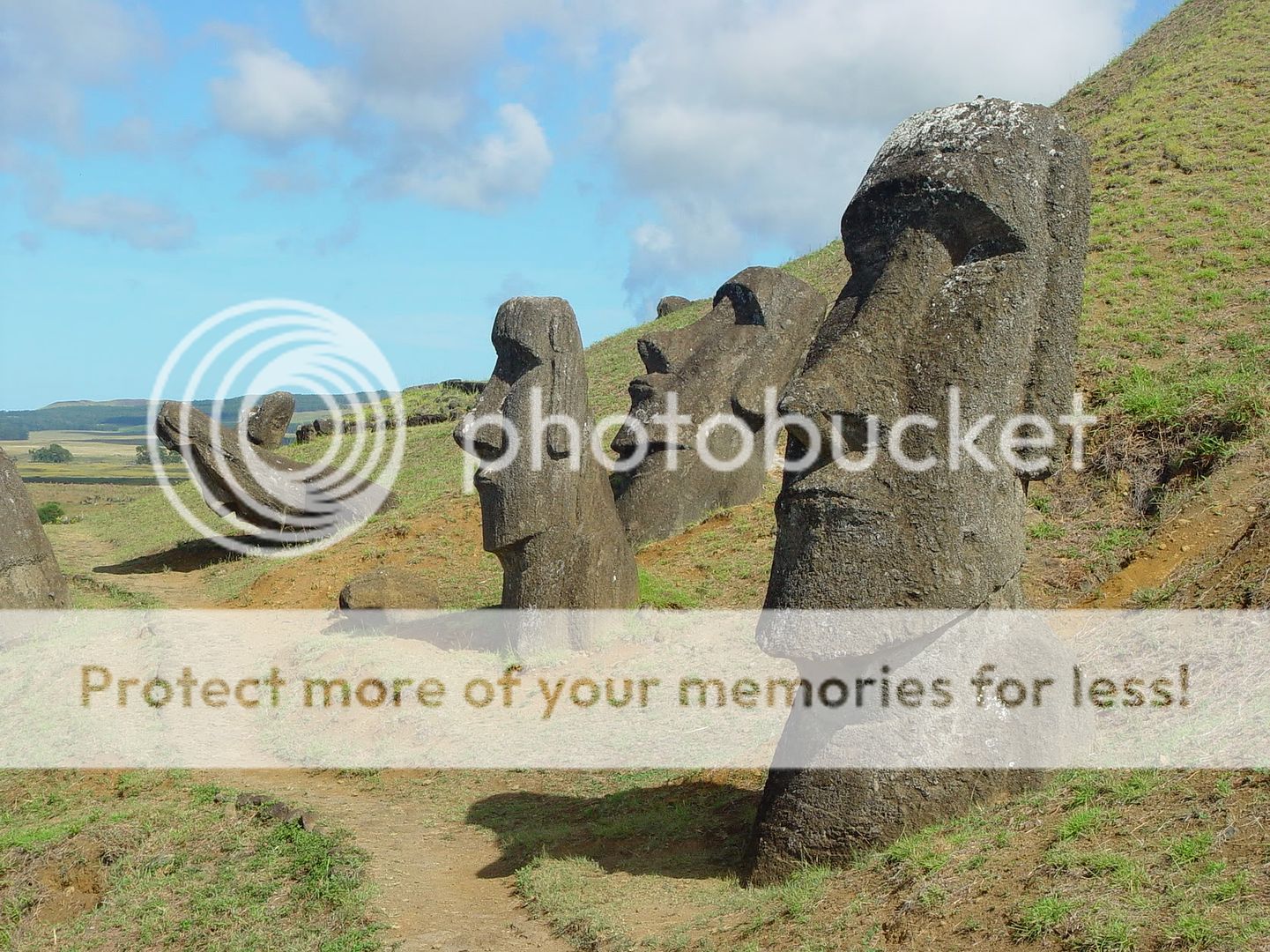
Something else that isn't what it seems - the Moai aren't just statues on the surface but have large bodies that are buried deep in the ground!

Next time I'll be introducing my final case study.

Merry Christmas!!

Wednesday, 17 December 2014

Burn baby burn

In a 2008 study, Mann et al use macrofossils and pollen data from 2 sediment cores to investigate drought, vegetation changes and human settlement on Easter Island.

Interestingly they assert that they found no evidence of a rat outbreak that could have caused collapse. As a rat outbreak would affect tree abundances and species composition, any such event would be reflected in the pollen record. However no evidence was found. However they do point out that the paleo record of Easter Island is still very poorly understood and the stratigraphic record may be too coarse to reflect this event. Therefore if a higher resolution record can be obtained, it may be possible to accredit or disprove Hunt (2006)’s rat hypothesis.

Source: SkyMe


From their sediment cores, they are able to infer ecological changes and drought events that occurred on Easter Island. They found that the beginning of agriculture on the island occurred straight after a severe drought. Marked soil erosion was found to have occurred at 1200AD which they attribute to human deforestation.

They also investigate the role of fire on the island. Before human settlement, there is little evidence of fire in the stratigraphic record (i.e. very little charcoal in the record). This shows that natural fire on the island is very uncommon and resultantly the ecosystem is ‘fire-naïve’ or in other words is not used to fire, has a low tolerance and cannot recover well from fire events. After human settlement, human induced fire shown by increased charcoal in the sediment record provides evidence to suggest that human degradation of the environment was a primary cause in societal collapse.

What Easter Island may have looked like pre-human settlement. 


But, it is very difficult to determine environmental changes on Easter Island. As Mann et al point out, the remoteness and isolation of the island makes it difficult to compare environmental changes with surrounding areas, as the nearest land is very far away and quite probably has a different environmental regime. However some links can be drawn. Mann et al explain that there is evidence of correlative drought events in central Chile that agree with the climate record on Easter Island. Therefore they suggest that central Chile may provide a comparison site and might demonstrate synchronous drought events. Rainfall changes in Chile and tree ring events from Patagonia and Tasmania correlate with a known drought event on Easter Island between 900-1100AD. Perhaps with a better understanding of the Easter Island paleo record we might be able to infer more from climate events in Chile and Patagonia.


However this evidence has since been developed by Mulrooney, 2013 who points out that we must not confuse correlation with causation: deforestation may not have caused societal collapse. The radiocarbon dates of this study contradict other studies that claim the island underwent widespread abandonment. Mulrooney found that inland areas were not abandoned as previously thought and the Rapa Nui utilized most of the island up until European colonization in the late 1600s. Similarly the archaeological evidence from the island does not fit a societal collapse scenario model. Radiocarbon dates show continued habitation of island throughout the previously assumed collapse period. 

Till next time!

Saturday, 6 December 2014

The curious incident of the rats in the night time

Let's now move away from Rull et al, 2013's commentary, who has faced criticism by other academics. Mieth and Bork, 2010 concluded from their investigation of Easter Island that any deforestation was done by humans. They found burnt palm stumps and areas of burnt soil indicating that anthropogenic activity was the cause of deforestation, rather than by rats. Similarly they found patches where palm trees had begun to regenerate, which they assert would not happen if rats had prevented regrowth by eating palm seeds.

More recently, other criticism has come from Larsen and Simpson, 2014 who argue that Rull et al relies too heavily on paleo-data. They argue that past environmental change provides limited insight into societal changes or collapse because every society has some capacity to adapt. They are also critical of Rull et al for failing to consider the potential role of natural disasters such as tsunamis, floods, earthquakes or volcanic eruptions. Any one of these events may have proven too much for a small, isolated population. However there does not seem to be much evidence for any of these events around the time or Rapa Nui decline. Larsen and Simpson also comment on the absence of rats as a potential influence in Rull et al’s discussion.

The role of rats was first investigated by Hunt, 2006 and has since been developed by Hunt and Lipo, 2012. When the Polynesian settlers reached Easter Island, they brought chickens and rats with them, shown by the sudden appearance of bones from these species in the sediment record of Easter Island. The pristine forest conditions of Easter Island (pre-human disturbance) provided ideal conditions for rats due to the almost infinite food available – from seeds, fruits and large insects. It is thought that rats ate seeds from trees which slowed the regeneration rates of the forests. 


Rat gnawed seed cases - they can penetrate hard, thick seed cases that birds cannot. 
Source: Hunt, 2006


At first this theory might seem a bit far-fetched. However Easter Island is fairly small (164km2) and in ideal conditions, rat populations can reproduce at rates doubling every 47 days. Over a short amount of time Easter Island would have become inundated with rats, especially seeing as, being an introduced species, the rats had very few predators.

The impacts of rats are well studied in other locations such as Hawaiian Islands and New Zealand. Therefore the presence of rats may have had devastating impacts, especially at a time of human resource exploitation. In conjunction with this, at the time of rate population growth, bird extinctions occur demonstrating a double-edged sword – this would have further influenced seed dispersal and potentially a food source of the Rapa Nui. 

This theory has since been developed and refined (2012) and still stands. It just goes to show – don’t underestimate rats.

Till next time!

Source: Radiolab


Wednesday, 3 December 2014

Let's not blame it all on the Rapa Nui

Generally speaking there has been a move away from the original ecocide theory. As more and more is learnt about past climate changes, how these changes relate to vegetation and society, more complex theories develop.

Firstly I just want to draw your attention to the importance of proxies in enhancing our understanding of past events. Rull et al 2013 (and an updated 2014 version) explore evidence showing that human presence on Easter Island was quite probably 1500 years earlier than previously thought. The introduction of new plants and increases in charcoal at around 450 AD suggest human populations reached the island long before we previously thought.

The Moai at night. Source: National Geographic

Rull et al demonstrate this in their meta-study, which looks at emerging evidence supporting the move away from a simple ecocide hypothesis. The Ecocide theory dismisses any causational factor that isn’t human activity and implies that the change from palm forests to open grassland (which dominates Easter Island today) was abrupt and sudden.

However paleoecological and archaeological evidence suggests the island actually underwent a more gradual change, spanning over 2000 years. In addition, results from the authors’ previous studies show no empirical evidence of any abrupt changes. Diatom assemblage changes and sediment from Lake Raraku (Easter Island) illustrate a very slow change towards slightly wetter conditions. With the onset of wetter climates, an increase in palm demise was found and an increase in charcoal, used as a proxy for fire.

Lake Raraku, Easter Island. Source: Flikr

Rull et al’s argument is that with greater water availability due to a wetter climate, populations on Easter Island would have been encouraged to increase agricultural land. This increasing demand, driven by a growing population in a more favourable climate, increased the use of resources and need for cultivable land. Rull et al do accept that currently this theory is highly hypothetical and more archaeological evidence is needed to increase its standing. However this is a very logical argument and follows observed trends in most human population growth.


Rull et al conclude that the history of Easter Island and therefore our understanding of what happened there needs rethinking and suggests a total revision may be necessary. I agree with this conclusion because too often an over-simplified explanation is accepted as fact. As the capabilities of looking at past climate and vegetation changes improves with paleolimnology and paleoclimatology we should revisit these cases of civilization collapse. I think we could probably learn a lot and may realise that more credit should be given to these ancient societies. Rull et al points out that new theories are always emerging, two most recent ideas focussing on climate changes relating to the Little Ice Age and ENSO. These may become more prominent hypotheses if evidence to support them is found.

Until next time!


Sunday, 30 November 2014

Land ahoy: Easter Island

Easter Island is a Polynesian island, located in the south-eastern Pacific Ocean. Around 700 -1200 A.D. a small group of Polynesians reached the island and settled there (despite the closest inhabited area they could have come from being 1,600 - 2,000 miles away). It’s probable that they came from either the Gambier Islands or the Marquesas Islands as these were the closest inhabited islands. This small group of people, possibly just one family, grew into the Rapa Nui civilization. 

Easter Island location... Pretty out of the way. Source: Google Maps


During their time on the island 887 monumental statues called ‘Moai’ were erected and dramatic landscape change occurred. 

Moai statues. Source Taringa!

Have a read of the National geographic article on the history of the Moai statues. There's also a really nice animation on how it's thought the statues got to where they are now, which you can watch in full on Youtube. (It gets going 40 seconds in!).


It is thought that the Rapa Nui civilization ended roughly in 1530 with a collapse of the Ancestor Cult and the rise of the new Bird Man Cult.

As we’re beginning to learn, when it comes to civilization collapse a load of theories come with it.

The traditional explanation for collapse was Ecocide, coined by Jared Diamond in his 2005 book 'Collapse: How societies choose to fail or succeed'. He argues that inhabitants degraded their environment, due to their preoccupation to create imposing stone statues, to such an extent that they were no longer able to survive there. Through paleoecology it’s been shown that when the island was colonized it had dense forests with high species diversity. Today there are no trees on the island. It has been argued that this subsistence farming society cut down all the trees by slash-and-burn management which led to a growing population and decreasing wood resources. This increasing population pushed the islands carrying capacity to the extreme and the lack of wood meant that they could not restore/build new canoes for them to leave the island. Jared Diamond argues that Easter Island is a classic example of a society causing its own collapse by over exploiting their environment.


A Malthusian explanation can also be applied suggesting that populations grew until the carrying capacity of an increasingly degraded environment was surpassed, which led to dramatic population decline and collapse.

For a long time these two theories were used to explain what happened on Easter Island. However with more modern technologies and deeper understandings of societal-environmental interactions, new theories take precedence.

In my next post I’ll start looking into how theories of collapse have progressed from ecocide and the classic Malthusian hypothesis.


In the meant time take a look at some of the slightly weirder hypothesis that have emerged (especially the alien invasion). It may be a good idea to have a closer look at the role of rats…  10 fascinating theories

Wednesday, 26 November 2014

Drought ain't all that bad

So we've had a look at the main debates surrounding the Mayan collapse. Here I want to emphasize the central role complex societal-environmental interactions play in civilization collapse, the appreciation of which has become central to contemporary understandings of societal decline.

Lane et al (2014) combines proxy evidence taken from multiple reports relating to the Terminal Classic Period drought. The drought events experienced by the Mayans throughout their history is thought to have been caused by seasonal movements of the Inter Tropical Convergence Zone (ITCZ). Its southward movement results in dryer conditions of the Yucatan Peninsula, including the Mayan lowlands. Due to the global influence of the ITCZ, evidence of this southward movement can be found elsewhere, such as China, the Dominican Republic and the Lesser Antilles.

Map showing differences in position of ITCZ. Source: PNAS


Gypsum records and ostracod ­180 level increases from Mexico, speleothems records from Guatemala and changes in Titanium concentrations from the Cariaco Basin all demonstrate a drought occurring in the Terminal Classic Period and indicate reduced precipitation levels over the Mayan lowland at this time. Despite this evidence of drought often being used to explain the collapse of the Mayans however, some very different responses close-by suggest that this may not be a suitable explanation.

Lane et al point out Caribbean populations would have experienced similar drought conditions to the Mayans. Although populations were not nearly the same size as the Mayan civilization, Caribbean populations responded positively to this climatic change. The Ostionoid culture increased agricultural production and subsequently experienced population growth. Populations in the Lesser Antilles also experienced a ‘dynamic period’ during which they expanded their territory and developed more sophisticated socio-political systems.

Map showing Yucatan Peninsula and Lesser Antilles. Source: GoogleMaps


The clear difference in response to the Terminal Classic Period drought illustrates the importance of societal response to a climate event. It’s important not to overlook the range of socio-political variables that are at play.

Some art from the Ostionoid culture. Source: National Museum of the American Indian

Armstrong (2014) supports this by stressing the point that collapse of any civilization is complex and it’s unlikely that a single factor would be the only cause. By analysing the pollen record taken from a lake sediment core from Guatemala, Armstrong concludes that drought caused a ‘chaotic spiral of adversities’. Armstrong summarizes that drought posed obstacles that the Maya could not overcome, which led to political instability and the breakdown of the social system. Here it is important to remember Lane et al.’s argument that socio-political factors are as important as drought in the success of a civilization’s response to climate change.

It would be difficult and pretty silly to try and argue that climate had no influence over the Mayan collapse. However we need to remember that other factors can prove to be just as important.

Before leaving the Mayans alone and moving onto the next case study, I’ll leave you with a quote from Armstrong: “The collapse of the Classic Maya empire functions as a warning to current and future generations: humans are not separate from the natural world but they are a part of it.”

Sunday, 23 November 2014

Cats got claws

There’s been a lot of debate surrounding the cause of the Mayan collapse. Within this debate, there is even more disagreement on the timing and duration of a drought event.

In this post I want to outline the 'mega-drought' hypothesis and demonstrate how the importance of this theory has changed over time.

In 1995 Hodell et al presented data from a sediment core taken from Lake Chichancanab, on the Yucatan Peninsula. This evidence suggested that a ‘mega-drought’, which lasted over 200 years, was the cause of the Mayan collapse.

Site of Lake Chichancanab. Source: GoogleMaps

This theory has been extensively criticised due to the questionable evidence used to support it. Hodell et al (2005) defended their earlier work, asserting that their analysis had been misinterpreted. Hodell (2005) discusses evidence of a 50-year and 208-year drought cycle which corresponded with the decline of the Maya. Although elements of their argument correlate with other academics’, such as high climatic variability, fundamental differences remain especially the occurrence of a drought cycle for these periods of time.


Carleton et al (2014) is heavily critical of Hodell’s 50-year and 208-year drought cycles. Carelton re-evaluated the empirical data from Hodell (1995 and 2005) and rather bluntly asserts that “there is no evidence for a 208-year drought cycle in the Lake Chichancanab dataset” or in fact evidence from this core of any drought. They continue to argue that these 2 drought cycles came about by biased interpolation and that the ‘evidence’ is a methodological artefact. 

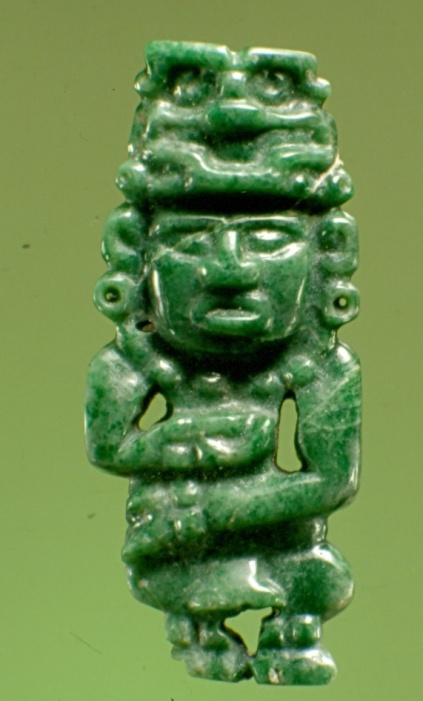
An image of a real Mayan artefact. Source: Royal Ontario Museum


However this evaluation may have been a bit harsh. Frappier et al (2014) argues that the magnitude of mega-droughts during the Mayan period were underestimated. New evidence from mud layers in stalagmites from caves in the Yucatan Peninsula provide annually resolved proxy evidence that suggests mega-droughts played an important role in the Mayan collapse. They also understand the complexity of factors that led to collapse, suggesting that droughts caused wildfires, brought about pest outbreaks and that a high frequency of droughts over a short temporal scale would have caused shifts to alternate stable states. A combination of these forcing factors may well have been too much for the Mayans to handle.

Hopefully this shows that there's a lot of debate over the role climate played in the Mayan collapse, especially with the emergence of more and more accurate techniques.

Next time I'll look a bit more into drought and afterwards move on to the next case study!