Tuesday, 13 January 2015

We've reached our final destination

Phew! Over the past few months we’ve managed to go through a fair bit! During this time we’ve looked at a variety of case studies of civilization collapse from around the world. On our journey we’ve been to Mesopotamia to meet the Akkadians, to Mesoamerica for our Mayan friends, on to Easter Island to chill with our Rapa Nui buddies and have stopped off in Cambodia to see the Khmer gang.

During our travels we’ve looked at an assortment of factors that have led to civilization collapse. 

These have included:
  •          Social: tension, unrest and rebellion, disease
  •          Political: conflict, invasion, power relations
  •          Economical: costs and losses, trade
  •          Religious: the shift in religious authority
  •          Environmental: drought, deforestation, resource exploitation, rats!

These key factors combine all our case studies together as they often share more than one similarity. I think from all case studies we’ve looked at, it’s clear that collapse is never simple. It is important to consider how all the elements interact. As new evidence emerges older theories either gain more validity or are shunned. However, when looking at all the examples covered, I think that environmental change is the greatest threat to civilizations and in the past has played a pivotal role in collapse. The response to such events can be the nail in the coffin.

To relate back to an article from a previous post, an article by Wiener (2014) published last year shows the importance of connectedness of a society for its survival. This Network Theory demonstrates how the more interconnected the civilization, the easier it’ll be to resolve issues. If a society is isolated (such as the Rapa Nui on Easter Island) this can be difficult and the critical stress threshold can be reached quickly, after which the entire system will collapse.

Most societies today are highly interconnected, which may act as a buffer against the climate changes that are approaching and help maintain functioning societies. However we must not rely on this. Lessons can and must be drawn from the examples of civilization collapse we’ve seen. Today, societies around the world face the threat from climate change on top of deep running social, political and religious tensions. If we do not learn from the mistakes of past societies, many may be heading for a similar fate. We need to develop an understanding of underlying environmental changes that may lead to social unrest, economic losses and political instability and we must mitigate them!

Sadly, for now, this point marks the end of our travels, I hope you've enjoyed reading about the different forces behind collapse. 

Until next time!

Source: Auditel

Saturday, 10 January 2015

Tying up the loose ends

So we've looked at some different theories behind the collapse of the Khmer empire, including:
  • Climate events such as drought and changes in the monsoonal system
  • War and conflict
  • Socio-political unease
Diamond, 2009 is a nice article that ties together all the interweaving aspects involved in the Khmer empire's demise. It also neatly (maybe too neatly) links the collapses of the Khmer empire, Mayas and Inca together.

Diamond demonstrates how a boom in agriculture in Angkor led to population growth that placed pressure on the Angkor infrastructure. Deforestation, resource exploitation and land degradation followed in attempt to sustain its large population. Socio-political unease, conflict with neighbouring cities and over reliance on a vulnerable irrigation system ultimately led to the collapse of the Khmer empire. Although this article is a few years old, it covers important factors of collapse that still exist in contemporary understanding (shown in more recent articles I've looked at). However I think it over-simplifies civilization collapse and presents a homogenous theory that is not fully representative of the variance between case studies. 

Take a look at this clip from a National Geographic documentary on Angkor Wat. See the whole video on Youtube

Also have a quick read of the New York Times article by Maugh (2010). It's a good summary piece and I'm glad to see that they have acknowledged the role of factors other than climate.

Looking at the literature, I think that climate probably had a lot to do with collapse. Changes in the monsoon system would have come as an unpleasant surprise to the people of the Khmer empire. This climate change had serious impacts on agriculture and water resources that the empire could not overcome. However a society's response to environmental change is also important. In the case of the Khmer empire and its centre Angkor, fear and confusion over the change in climate acted to undermine the authorities. Matters were probably made worse by conflict with other empires and within the empire.

Keep your eyes peeled for my next post, when I'll summarise what we've found about civilization collapse in general.

Wednesday, 7 January 2015

Trade and social unease

Lieberman, 2011 argues that changes in trade and socio-political unease were central to the collapse of the Khmer empire. These factors also contributed to the collapse of centres of other civilizations in Asia.

A shift from terrestrial to maritime trade undermined the centre of the Khmer Empire, Angkor, and enabled once peripheral cities of the empire to become new centres of power, based on proximity to maritime trade. Key shipping routes bypassed Angkor and led to economic instability and eventual collapse. These arguments have more recently been developed by Evans et al, 2013.

As a result of shifts in trade and subsequent political disorder and fragmentation, Angkor placed greater pressure on its people. Angkor exhausted its people by focussing a lot of energy on constructing grand architectural structures, most significantly Angkor Wat. With growing social unease and simultaneous expansion of Buddhism, many civilians converted to Buddhism, which worked to undermine the ideological system that had once allowed the growth of Angkor.

Evans et al takes it further and argues that the centre of power was shifted from Angkor to coastal areas that would benefit from the new maritime trade. This, on top of social unease and dramatic religious change, led to mass outward migration and Angkor's collapse.
Source: Cartoon stock


In Lieberman’s opinion, this social unrest was made worse by ecological deterioration and declining agricultural output as a result of drought. Labour and land productivity fell which made the heart of the Khmer empire particularly vulnerable to the military attack that occurred in 1432. Following this attack universal conscription across the city was implemented. This drew attention away from other pursuits, such as stabilizing trade and agricultural output.

Evans et al argues that the urban intensification that had occurred during the zenith of the Khmer empire made the situation worse.

Till next time!

Sunday, 4 January 2015

Huh! War! What is it good for? Absolutely nothing!

The idea of conflict as the cause of the Khmer Empire's collapse originated in 1951 in Brigg's 'The Ancient Khmer Empire', but it has always been debated. Very few contemporary articles promote this theory. Having said that, Chachavalpongpun, 2012 plainly states that the Khmer Empire fell into decline after it was invaded by an army in 1431. He proposes that this was the cause behind the demise of Angkor and marked the point in time when the Khmer Empire fell and its structures were absorbed by the new emperor, Siam. He argues that this form of struggle has persisted throughout the history of conflict between Thailand and Cambodia. An article for the Ancient History Encyclopaedia by Plubins, 2013 (mentioned in a previous post) also asserts that the invasion of the Thai army was the key factor that led to collapse. 

Several blogs, such as Angkor HistoryThe Angkor Empire, Environment and Conflict and The Warfare Historian, argue that conflict played an important role throughout the Khmer Empire's history and in its demise.

A wall carving from Angkor Wat, depicting the Khmer army marching into battle against the Chams from Vietnam. Source: Photo bucket


It may be that this theory deserves more attention from contemporary academics. As mentioned in my first post on the Khmer empire, few historical records exist after 1300s which may make this difficult. On the other hand it could be that there is little evidence to support it.

It would not come as a surprise to me that following a period of instability, the heart of the Khmer empire, Angkor, was attacked. Alternatively in combination with other factors such as environmental change and a lack of food and water, conflict within the empire may have occurred. I do not doubt that this civilization experienced a long history of conflict, however I do not believe it was the main cause of their demise. In my next few posts I’ll have a look at some other possible triggers, such as changes in trade.


Stay tuned!

Wednesday, 31 December 2014

The Hydraulic City

Buckley et al, 2010 present a good argument for the role of climate in the demise of the Khmer empire. Using Vietnamese tree rings that span the past 750 years, they show how severe inter-annual and inter-decadal drought periods intersected by intense monsoonal rainfall acted as a stressor leading to this societies’ collapse.

Angkor, the capital of the Khmer empire, if often referred to as the ‘hydraulic city’. This is because of the extensive canal, embankment and reservoir networks that supplied the city and its sprawling suburbs with water and irrigation for agriculture. These networks once supported a complex agricultural system.

A diagram of the water network in Angkor. Source: Blogspot


As the city expanded however, these networks became increasingly complex, convoluted and more difficult to manage, making them more vulnerable to large scale climatic events. Buckley et al argue that the tree rings show a severe drought at the time associated with the collapse of Angkor, which coincides with the transition from Medieval Climate Anomaly to the Little Ice Age. Drought periods were then disrupted by period of intense rainfall. This combination of drought and intense rainfall exacerbated erosion in the northern catchment. This sediment was then washed into the water system in the south which resulted in blocked water networks and the in-filling of canals. Buckley et al suggest that a single severe flood event could fill an entire canal section. In Angkor today, evidence of modifications in attempt to solve incurable failures in the water network can be found. 

Many academics have developed these arguments more recently and the argument remains very much the same. There is a vast amount of evidence from paleo-climate proxies that supports this theory and this argument has become a key explanation for the collapse of the Khmer empire. Although only the abstract is available at the moment, Afrifa et al, 2014 demonstrate the ongoing development of this theory. Fang et al, 2013 explain how drought, caused by a reduced Asian summer monsoon and dampened Westerlies, was a key factor in decline.

Angkor Wat, surrounded by a major water work. Source: Angkor Guide


In one case, radiocarbon dates taken from sediment found in a canal showed that it was filled in during the 14th century. This shows that the canal was filled by flood debris from the time of Angkor and was never cleared out. This specific canal was one of the primary links between Angkor and Lake Tonle Sap which supplied water to the empire and Buckley et al conclude that this is evidence of the devastating impacts climate change had on the empire.

On top of devastating impacts of climate on water supply, other economic, social and geopolitical factors were also at play. Buckley et al acknowledge these, which include growing conflict with the Siamese Kingdom of Ayuddhaya (which is often blamed as the cause of collapse) and the increasing importance of maritime trade which caused the Khmer empire to turn away from inland agriculture and increased integration with regional trade.


I will look into these other factors in my next few posts.

Sunday, 28 December 2014

The Khmer Empire

The Khmer Empire was established in the early 9th century (800 C.E.) and had collapsed by 1430s. It was once the largest empire in South East Asia and existed in what is now Cambodia.

The Khmer empire was an agriculturalist society and relied heavily on rice cultivation. The extensive rice irrigation network allowed rice surpluses which helped support a large population. The Khmer empire had a sophisticated irrigation and water storage system as well as stable trade connections.

A temple once used for worship now covered by trees, Angkor. 
Source: WanderingMee


Historical records become very sparse after the 1300s, however we know that no large temples or monuments were erected after this period. Widespread abandonment of the Khmer Empire occurred roughly around this time. Some records attribute this decline to an invasion of the Thai army. Check out Plubins, 2013 for the Ancient History Encyclopedia. This is a good article for background knowledge, however I think it relies too heavily on the Thai army as an explanation.

It’s thought that one line of kinds remained in Angkor, the centre of the Khmer empire, while other kings moved to Phnom Penh. Gradually the economy was transferred to the new kingdom in Phnom Penh and therefore so did political power. This is thought to have led to the collapse of the Khmer empire in combination with conflicts within the royal family and Phnom Penh becoming the new centre of trade (New World Encyclopaedia).


However, recently other theories have emerged. The first to be looked at will be the role of climatic change which I’ll cover in my next post.

Wednesday, 24 December 2014

Things are not always as they seem

So we've looked at the main theories behind the collapse of the Rapa Nui of Easter Island. I think it's fair to say that there is little consensus as to what actually led to the decline of this culture.

Rather than hypothesize about possible triggers behind their decline, Bower (2014) has developed all of these ideas and takes an alternative approach. Bower argues that maybe the case of Easter Island shouldn't even be considered as an example of collapse.

Source: Harris, Cartoonstock


He stresses that unlike other articles, such as Mann et al (2008) from my previous post, deforestation does not equal societal collapse and correlations must not be confused for causation. He points out that, contrary to popular belief, the Rapa Nui civilization did not implode and disappear before European colonization in 1722. In fact the Rapa Nui society persisted at a constant level until 1774 when the culture declined. This decline is thought to have been caused by diseases introduced to the Island by European colonizers. Agriculturalists adapted to deforestation and the decrease in palm trees by turning to yam and sweet potato cultivation. Clever methods to reduce wind damage to small plants and reduce rain-water evaporation were developed, such as enclosing agricultural areas with rocks. This also deterred weed growth and improved soil nutrients.

Bower states that "the social collapse of the Rapa Nui has long been assumed, but there is so scientific evidence to support this". This demonstrates that the finer details need to be looked at when it comes to civilization collapse - things are not always as they seem!


Source: WorldlessTech                                                           Source: The Daily Omnivore


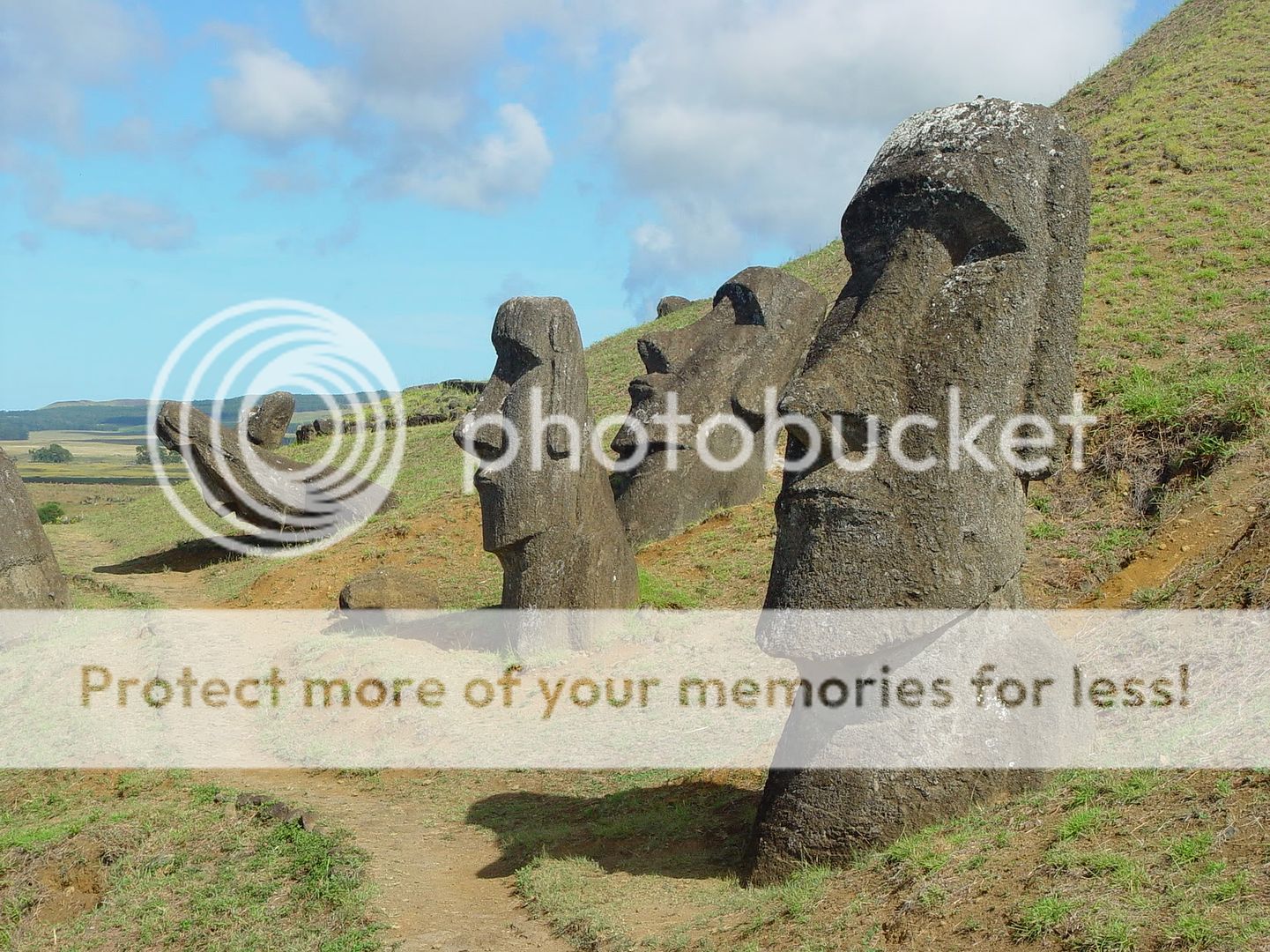
Something else that isn't what it seems - the Moai aren't just statues on the surface but have large bodies that are buried deep in the ground!

Next time I'll be introducing my final case study.

Merry Christmas!!

Wednesday, 17 December 2014

Burn baby burn

In a 2008 study, Mann et al use macrofossils and pollen data from 2 sediment cores to investigate drought, vegetation changes and human settlement on Easter Island.

Interestingly they assert that they found no evidence of a rat outbreak that could have caused collapse. As a rat outbreak would affect tree abundances and species composition, any such event would be reflected in the pollen record. However no evidence was found. However they do point out that the paleo record of Easter Island is still very poorly understood and the stratigraphic record may be too coarse to reflect this event. Therefore if a higher resolution record can be obtained, it may be possible to accredit or disprove Hunt (2006)’s rat hypothesis.

Source: SkyMe


From their sediment cores, they are able to infer ecological changes and drought events that occurred on Easter Island. They found that the beginning of agriculture on the island occurred straight after a severe drought. Marked soil erosion was found to have occurred at 1200AD which they attribute to human deforestation.

They also investigate the role of fire on the island. Before human settlement, there is little evidence of fire in the stratigraphic record (i.e. very little charcoal in the record). This shows that natural fire on the island is very uncommon and resultantly the ecosystem is ‘fire-naïve’ or in other words is not used to fire, has a low tolerance and cannot recover well from fire events. After human settlement, human induced fire shown by increased charcoal in the sediment record provides evidence to suggest that human degradation of the environment was a primary cause in societal collapse.

What Easter Island may have looked like pre-human settlement. 


But, it is very difficult to determine environmental changes on Easter Island. As Mann et al point out, the remoteness and isolation of the island makes it difficult to compare environmental changes with surrounding areas, as the nearest land is very far away and quite probably has a different environmental regime. However some links can be drawn. Mann et al explain that there is evidence of correlative drought events in central Chile that agree with the climate record on Easter Island. Therefore they suggest that central Chile may provide a comparison site and might demonstrate synchronous drought events. Rainfall changes in Chile and tree ring events from Patagonia and Tasmania correlate with a known drought event on Easter Island between 900-1100AD. Perhaps with a better understanding of the Easter Island paleo record we might be able to infer more from climate events in Chile and Patagonia.


However this evidence has since been developed by Mulrooney, 2013 who points out that we must not confuse correlation with causation: deforestation may not have caused societal collapse. The radiocarbon dates of this study contradict other studies that claim the island underwent widespread abandonment. Mulrooney found that inland areas were not abandoned as previously thought and the Rapa Nui utilized most of the island up until European colonization in the late 1600s. Similarly the archaeological evidence from the island does not fit a societal collapse scenario model. Radiocarbon dates show continued habitation of island throughout the previously assumed collapse period. 

Till next time!

Saturday, 6 December 2014

The curious incident of the rats in the night time

Let's now move away from Rull et al, 2013's commentary, who has faced criticism by other academics. Mieth and Bork, 2010 concluded from their investigation of Easter Island that any deforestation was done by humans. They found burnt palm stumps and areas of burnt soil indicating that anthropogenic activity was the cause of deforestation, rather than by rats. Similarly they found patches where palm trees had begun to regenerate, which they assert would not happen if rats had prevented regrowth by eating palm seeds.

More recently, other criticism has come from Larsen and Simpson, 2014 who argue that Rull et al relies too heavily on paleo-data. They argue that past environmental change provides limited insight into societal changes or collapse because every society has some capacity to adapt. They are also critical of Rull et al for failing to consider the potential role of natural disasters such as tsunamis, floods, earthquakes or volcanic eruptions. Any one of these events may have proven too much for a small, isolated population. However there does not seem to be much evidence for any of these events around the time or Rapa Nui decline. Larsen and Simpson also comment on the absence of rats as a potential influence in Rull et al’s discussion.

The role of rats was first investigated by Hunt, 2006 and has since been developed by Hunt and Lipo, 2012. When the Polynesian settlers reached Easter Island, they brought chickens and rats with them, shown by the sudden appearance of bones from these species in the sediment record of Easter Island. The pristine forest conditions of Easter Island (pre-human disturbance) provided ideal conditions for rats due to the almost infinite food available – from seeds, fruits and large insects. It is thought that rats ate seeds from trees which slowed the regeneration rates of the forests. 


Rat gnawed seed cases - they can penetrate hard, thick seed cases that birds cannot. 
Source: Hunt, 2006


At first this theory might seem a bit far-fetched. However Easter Island is fairly small (164km2) and in ideal conditions, rat populations can reproduce at rates doubling every 47 days. Over a short amount of time Easter Island would have become inundated with rats, especially seeing as, being an introduced species, the rats had very few predators.

The impacts of rats are well studied in other locations such as Hawaiian Islands and New Zealand. Therefore the presence of rats may have had devastating impacts, especially at a time of human resource exploitation. In conjunction with this, at the time of rate population growth, bird extinctions occur demonstrating a double-edged sword – this would have further influenced seed dispersal and potentially a food source of the Rapa Nui. 

This theory has since been developed and refined (2012) and still stands. It just goes to show – don’t underestimate rats.

Till next time!

Source: Radiolab


Wednesday, 3 December 2014

Let's not blame it all on the Rapa Nui

Generally speaking there has been a move away from the original ecocide theory. As more and more is learnt about past climate changes, how these changes relate to vegetation and society, more complex theories develop.

Firstly I just want to draw your attention to the importance of proxies in enhancing our understanding of past events. Rull et al 2013 (and an updated 2014 version) explore evidence showing that human presence on Easter Island was quite probably 1500 years earlier than previously thought. The introduction of new plants and increases in charcoal at around 450 AD suggest human populations reached the island long before we previously thought.

The Moai at night. Source: National Geographic

Rull et al demonstrate this in their meta-study, which looks at emerging evidence supporting the move away from a simple ecocide hypothesis. The Ecocide theory dismisses any causational factor that isn’t human activity and implies that the change from palm forests to open grassland (which dominates Easter Island today) was abrupt and sudden.

However paleoecological and archaeological evidence suggests the island actually underwent a more gradual change, spanning over 2000 years. In addition, results from the authors’ previous studies show no empirical evidence of any abrupt changes. Diatom assemblage changes and sediment from Lake Raraku (Easter Island) illustrate a very slow change towards slightly wetter conditions. With the onset of wetter climates, an increase in palm demise was found and an increase in charcoal, used as a proxy for fire.

Lake Raraku, Easter Island. Source: Flikr

Rull et al’s argument is that with greater water availability due to a wetter climate, populations on Easter Island would have been encouraged to increase agricultural land. This increasing demand, driven by a growing population in a more favourable climate, increased the use of resources and need for cultivable land. Rull et al do accept that currently this theory is highly hypothetical and more archaeological evidence is needed to increase its standing. However this is a very logical argument and follows observed trends in most human population growth.


Rull et al conclude that the history of Easter Island and therefore our understanding of what happened there needs rethinking and suggests a total revision may be necessary. I agree with this conclusion because too often an over-simplified explanation is accepted as fact. As the capabilities of looking at past climate and vegetation changes improves with paleolimnology and paleoclimatology we should revisit these cases of civilization collapse. I think we could probably learn a lot and may realise that more credit should be given to these ancient societies. Rull et al points out that new theories are always emerging, two most recent ideas focussing on climate changes relating to the Little Ice Age and ENSO. These may become more prominent hypotheses if evidence to support them is found.

Until next time!


Sunday, 30 November 2014

Land ahoy: Easter Island

Easter Island is a Polynesian island, located in the south-eastern Pacific Ocean. Around 700 -1200 A.D. a small group of Polynesians reached the island and settled there (despite the closest inhabited area they could have come from being 1,600 - 2,000 miles away). It’s probable that they came from either the Gambier Islands or the Marquesas Islands as these were the closest inhabited islands. This small group of people, possibly just one family, grew into the Rapa Nui civilization. 

Easter Island location... Pretty out of the way. Source: Google Maps


During their time on the island 887 monumental statues called ‘Moai’ were erected and dramatic landscape change occurred. 

Moai statues. Source Taringa!

Have a read of the National geographic article on the history of the Moai statues. There's also a really nice animation on how it's thought the statues got to where they are now, which you can watch in full on Youtube. (It gets going 40 seconds in!).


It is thought that the Rapa Nui civilization ended roughly in 1530 with a collapse of the Ancestor Cult and the rise of the new Bird Man Cult.

As we’re beginning to learn, when it comes to civilization collapse a load of theories come with it.

The traditional explanation for collapse was Ecocide, coined by Jared Diamond in his 2005 book 'Collapse: How societies choose to fail or succeed'. He argues that inhabitants degraded their environment, due to their preoccupation to create imposing stone statues, to such an extent that they were no longer able to survive there. Through paleoecology it’s been shown that when the island was colonized it had dense forests with high species diversity. Today there are no trees on the island. It has been argued that this subsistence farming society cut down all the trees by slash-and-burn management which led to a growing population and decreasing wood resources. This increasing population pushed the islands carrying capacity to the extreme and the lack of wood meant that they could not restore/build new canoes for them to leave the island. Jared Diamond argues that Easter Island is a classic example of a society causing its own collapse by over exploiting their environment.


A Malthusian explanation can also be applied suggesting that populations grew until the carrying capacity of an increasingly degraded environment was surpassed, which led to dramatic population decline and collapse.

For a long time these two theories were used to explain what happened on Easter Island. However with more modern technologies and deeper understandings of societal-environmental interactions, new theories take precedence.

In my next post I’ll start looking into how theories of collapse have progressed from ecocide and the classic Malthusian hypothesis.


In the meant time take a look at some of the slightly weirder hypothesis that have emerged (especially the alien invasion). It may be a good idea to have a closer look at the role of rats…  10 fascinating theories

Wednesday, 26 November 2014

Drought ain't all that bad

So we've had a look at the main debates surrounding the Mayan collapse. Here I want to emphasize the central role complex societal-environmental interactions play in civilization collapse, the appreciation of which has become central to contemporary understandings of societal decline.

Lane et al (2014) combines proxy evidence taken from multiple reports relating to the Terminal Classic Period drought. The drought events experienced by the Mayans throughout their history is thought to have been caused by seasonal movements of the Inter Tropical Convergence Zone (ITCZ). Its southward movement results in dryer conditions of the Yucatan Peninsula, including the Mayan lowlands. Due to the global influence of the ITCZ, evidence of this southward movement can be found elsewhere, such as China, the Dominican Republic and the Lesser Antilles.

Map showing differences in position of ITCZ. Source: PNAS


Gypsum records and ostracod ­180 level increases from Mexico, speleothems records from Guatemala and changes in Titanium concentrations from the Cariaco Basin all demonstrate a drought occurring in the Terminal Classic Period and indicate reduced precipitation levels over the Mayan lowland at this time. Despite this evidence of drought often being used to explain the collapse of the Mayans however, some very different responses close-by suggest that this may not be a suitable explanation.

Lane et al point out Caribbean populations would have experienced similar drought conditions to the Mayans. Although populations were not nearly the same size as the Mayan civilization, Caribbean populations responded positively to this climatic change. The Ostionoid culture increased agricultural production and subsequently experienced population growth. Populations in the Lesser Antilles also experienced a ‘dynamic period’ during which they expanded their territory and developed more sophisticated socio-political systems.

Map showing Yucatan Peninsula and Lesser Antilles. Source: GoogleMaps


The clear difference in response to the Terminal Classic Period drought illustrates the importance of societal response to a climate event. It’s important not to overlook the range of socio-political variables that are at play.

Some art from the Ostionoid culture. Source: National Museum of the American Indian

Armstrong (2014) supports this by stressing the point that collapse of any civilization is complex and it’s unlikely that a single factor would be the only cause. By analysing the pollen record taken from a lake sediment core from Guatemala, Armstrong concludes that drought caused a ‘chaotic spiral of adversities’. Armstrong summarizes that drought posed obstacles that the Maya could not overcome, which led to political instability and the breakdown of the social system. Here it is important to remember Lane et al.’s argument that socio-political factors are as important as drought in the success of a civilization’s response to climate change.

It would be difficult and pretty silly to try and argue that climate had no influence over the Mayan collapse. However we need to remember that other factors can prove to be just as important.

Before leaving the Mayans alone and moving onto the next case study, I’ll leave you with a quote from Armstrong: “The collapse of the Classic Maya empire functions as a warning to current and future generations: humans are not separate from the natural world but they are a part of it.”

Sunday, 23 November 2014

Cats got claws

There’s been a lot of debate surrounding the cause of the Mayan collapse. Within this debate, there is even more disagreement on the timing and duration of a drought event.

In this post I want to outline the 'mega-drought' hypothesis and demonstrate how the importance of this theory has changed over time.

In 1995 Hodell et al presented data from a sediment core taken from Lake Chichancanab, on the Yucatan Peninsula. This evidence suggested that a ‘mega-drought’, which lasted over 200 years, was the cause of the Mayan collapse.

Site of Lake Chichancanab. Source: GoogleMaps

This theory has been extensively criticised due to the questionable evidence used to support it. Hodell et al (2005) defended their earlier work, asserting that their analysis had been misinterpreted. Hodell (2005) discusses evidence of a 50-year and 208-year drought cycle which corresponded with the decline of the Maya. Although elements of their argument correlate with other academics’, such as high climatic variability, fundamental differences remain especially the occurrence of a drought cycle for these periods of time.


Carleton et al (2014) is heavily critical of Hodell’s 50-year and 208-year drought cycles. Carelton re-evaluated the empirical data from Hodell (1995 and 2005) and rather bluntly asserts that “there is no evidence for a 208-year drought cycle in the Lake Chichancanab dataset” or in fact evidence from this core of any drought. They continue to argue that these 2 drought cycles came about by biased interpolation and that the ‘evidence’ is a methodological artefact. 

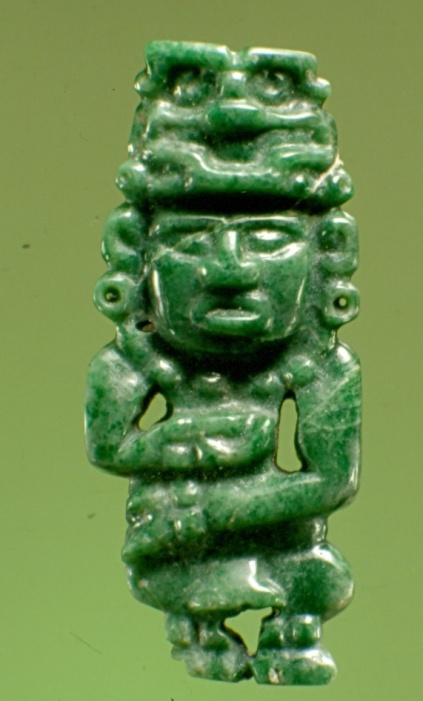
An image of a real Mayan artefact. Source: Royal Ontario Museum


However this evaluation may have been a bit harsh. Frappier et al (2014) argues that the magnitude of mega-droughts during the Mayan period were underestimated. New evidence from mud layers in stalagmites from caves in the Yucatan Peninsula provide annually resolved proxy evidence that suggests mega-droughts played an important role in the Mayan collapse. They also understand the complexity of factors that led to collapse, suggesting that droughts caused wildfires, brought about pest outbreaks and that a high frequency of droughts over a short temporal scale would have caused shifts to alternate stable states. A combination of these forcing factors may well have been too much for the Mayans to handle.

Hopefully this shows that there's a lot of debate over the role climate played in the Mayan collapse, especially with the emergence of more and more accurate techniques.

Next time I'll look a bit more into drought and afterwards move on to the next case study!

Tuesday, 18 November 2014

Much Ado About Drought

Despite all our hard work, Demarest (2001) states that decades of investigation have shown that diseases and foreign invasion are increasingly unlikely to be the cause of collapse.

So we need to look further – the remaining hypothesis surrounding this collapse is climate change.
There has been much debate over the timings and duration of climate change over the Classic and Terminal Classic period. I’ll just briefly outline the changes in understanding, to provide a basis for exploring arguments proposing climate change as a cause which will be covered over the next few posts.

Disagreements over drought. Source: Goose


Hodell (1995) presented evidence from lake sediment ‘implying’ (Hodell et al (2005) that a ‘mega-drought’ had occurred over the Terminal Classic Period which had great spatial extent and lasted between 50 - 208 years.

Several authors (including Carleton et al, (2014) and Lane et al (2014) whose arguments will be looked into in my next post) discount this theory with the support of independent palaeoclimatic evidence.

However recently Hodell et al (2005) has claimed that this work was misinterpreted and now presents evidence that the Yucatan Peninsula experienced multiple drought-wet cycles, which agrees with other academics’ work.


So stay tuned – I’ll be covering the aforementioned authors’ arguments over the next few posts!

Saturday, 15 November 2014

Trade No. 2

Just a quick one – I found this other article by Turner andSabloff (2012) who have developed ideas of trade and also argue that changes to trade routes was a key cause in the Maya collapse.

They go further than Golitko et al (in the last post) and say that the shift to coastal trade was as important, if not more so, than any environmental change. Although they accept that other factors were important, they point out that there must have been more at play than just drought/invasion. They ask why the Mayans didn’t return to their original settlements once the climate had returned to ‘normal’ conditions that they were well adapted to.


This highlights the point that no single factor can cause collapse/abandonment (disproving Environmental Determinism) and that the collapse of trade networks is a valid argument for collapse.

Source: Acting Man

That ship has sailed - changes in trade networks

More and more evidence is cropping up which supports the theory of changes in trade networks as a cause of collapse. Golitko et al, (2012) analysed abundances of obsidian (volcanic rock often used for tools or weapons) from 121 Mayan sites to demonstrate changes in social networks.

An example of a Mayan obsidian sacrificial knife. Source: Galleryhip

Their findings show that a shift in trade networks occurred around the time of Mayan collapse with a switch from terrestrial to sea-borne trade. This meant that proximity to the coast became vitally important in maintaining economic and political influence. As the importance of coastal trade and coastal networks increased, inland trade networks were no longer needed and collapsed (although I would have thought some networks would still have been useful). As a result the city of San Jose, which was once the main point of obsidian exchange, became much less significant.

Illustrations of the difference in obsidian supply sources between Classic and Terminal Classic periods, from Golitko et al (2012)


The trade of marine goods also became much more important and Golitko et al suggest that the Mayans may have ‘missed the boat’ on exploiting marine products due to their main settlement being in the central Yucatan Peninsula. This reduced access and connection to coastal imported goods resulted in diminished influence and power of the Mayans. Reduced economic stability may have led to increased social tension (and possibly conflict) and undermined the authority of the Maya elite.

I think that this theory could in part provide an explanation for the Mayan collapse. Of course no single factor would have brought a civilization such as the Maya down. However it is easy to see how changes in trade networks of a highly valuable commodity, which Golitko et al argue the Mayans were reliant on, reduced political and economic influence and pressures from other factors (e.g. invasion, disease, climate change) could have led to collapse.

Next time I'll be talking about the role of climate change!

Wednesday, 12 November 2014

Red alert - Invasion

Certainly the idea of an entire civilization being brought down by an epidemic outbreak is fairly exciting and in some ways relevant to today (it would definitely give many people a reason to overly freak out about the current Ebola outbreak).

But in the case of the Maya, there were probably other forces at play.

Sabloff and Willey (1967) argue that a foreign invasion by non-classic Mayans was ultimately the cause of the Maya collapse. They propose that the Mayans were invaded from the west by Mexicans and from the north by people from the Gulf of Mexico lowlands, just before the end of the Classic Period. They draw attention to the fact that they believe the Maya had not started to decline at the time of invasion, suggesting that it was the invasion itself which led to the fall of the Maya. This invasion would have led to warfare between surrounding populations and would have lasted several years.
An idea of what an invasion might have looked like... Source: ByCommonConsent


This idea of invasion is used by Sabloff and Willey to explain the large scale migration of people away from the Maya heartland, arguing that people were displaced after the invasion and were forced to resettle elsewhere.

Some archaeological evidence does support their hypothesis, with a sudden appearance and then rapid decline in fine paste ceramics in Classic Maya settlements. These ceramics, which were made from material and skills not practised by the Maya, were brought into Mayan settlements very suddenly but were not reproduced once there.

A theory of internal rebellion brought about by religious tensions between leaders and the public exists. This, according to Sabloff and Willey, is supported by archaeological evidence of the defacing of statues. However Sabloff and Willey emphasise that it is difficult to prove an internal rebellion occurred and that an external invasion was a much more likely cause of collapse.

Wouldn't want to bump into these guys. Source: Asady Movie - Apocalypto


Although this theory of external invasion would provide an exciting, dramatic, Hollywood-style explanation of Maya collapse, there is little real evidence for this hypothesis. Having said that, recently Tainter, 2014 has looked at conflict from a new angle. He argues that warfare became a very normal occurrence throughout the Classic Mayan period. As new enemies emerged and as new weapons were developed, warfare became more and more expensive. Their agriculturally-based economy could not sustain the pace of development and so resources were over-exploited. This led to collapse.

It is important to remember that war does not cause itself – there must have been some forcing factor which triggered an invasion (perhaps climatic pressures). Although an external invasion is quite likely to have occurred after the decline of the Maya once the civilization was weak, I think that it’s unlikely an invasion alone was the cause in the Mayan collapse. With advances in paleoclimatic evidence for historical climate change, this theory seems unlikely.

Till next time! 

Saturday, 8 November 2014

Disease - epidemic outbreaks

Right then – I’ve briefly outlined the Mayan civilization so now’s the time to start having a closer look at the 4 main hypothesis behind their collapse. In this post I’ll talk about the role of disease in extensive population loss and its role in destabilizing the Maya.

Acuna-Soto et al (2005)argue that Mesoamerica was a “cradle of human civilization” (p406) and the success of the Maya and other nearby populations (such as the highly successful populations living in Teotihuacan) reached a climax at the end of the Classic Period (200 AD – 900 AD). Civilizations in Mesoamerica then experienced dramatic population decreases and came to a rather sticky end during the Terminal Classic Period (570 AD – 900 AD).

Evidence of permanent abandonment of large settlements, the end of commercial economic exchange and the abandonment of large construction projects is used by Acuna-Soto et al as confirmation of large scale drops in population. Between 770 AD and 890 AD Mayan cities were abandoned and by 950 AD the Mayan territory of Mesoamerica and the Yucatan Peninsula was uninhabited. It is argued that this severe population decrease caused irreversible damage to the Mayan society.

Source: Blogspot

They argue that the dramatic population loss indicated by changes in Maya behaviour was, in part, caused by epidemic haemorrhagic fevers. This hypothesis is supported by similarities in climate and demographic changes between the Terminal Classic depopulation and severe epidemics in the same region during the 16th century. This epidemic outbreak coincided with some of the most severe drought events recorded in the past 1,000 – 4,000 years (interesting – we’ll look into these shortly). Proxy evidence, in the form of tree rings and sediment records from El Malpais (New Mexico), was used to date these drought events.


The prolonged drought events were interrupted by sporadic, short lived but extremely wet periods which Acuna-Soto et al argue would have provided ideal conditions for haemorrhagic fevers to multiply and spread.

So were the Mayans wiped out by a severe epidemic outburst that coincided with drought events? Or was the drought itself a more influential factor...?


Wednesday, 5 November 2014

Mesoamerica - a lovely place to live?

Now let’s move to Mesoamerica and look at the example of the Maya civilization.

In this post I’ll introduce the Mayans and in my next post I’ll start exploring causes that effected their collapse.

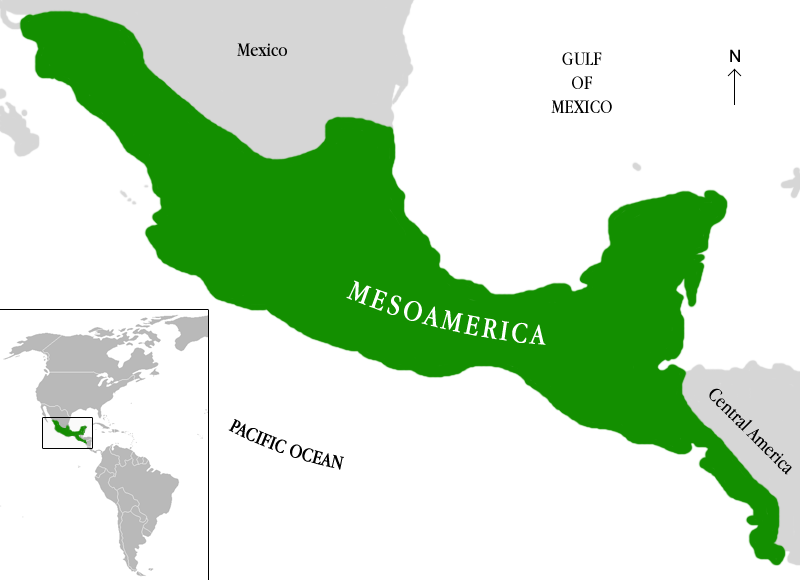
Mesoamerica relates to an area starting in central Mexcio, roughly at the Tropic of Cancer, reaching southwards almost to Costa Rica.

Source: Wikipedia


This area was home to many of the early civilizations and has seen great cultural and social changes over time. This region has enabled the development of many culturally complex civilizations, from the Omec during the Pre-classic or Formative Era (1000BC – 200AD), through to the Maya and Teotihuacan during the Classic period (200AD - 900AD) and Aztecs in the Post Classic phase (900AD - 1519AD). (Wikipedia)

Source: Maya Religion

The Mayan period stretched from 300AD - 900AD. It was a complex society with multi-ethnicity and several regional languages, religious beliefs and rituals, clothing for different activities and the technological ability to build pyramids and maintain agriculture.

Despite the complexity of this civilization, it collapsed dramatically during a period known as the Terminal Classic at 800AD - 900AD. This collapse poses one of the greatest mysteries in archaeology. Today archaeologists are still uncovering stone structures and learning about their  culture. Take a look at Mott, 2013 for National geographic for some background on the Mayans!


There are four primary theories for the collapse of the Maya: 
  1. Collapse of trade routes 
  2. Foreign invasion
  3. Epidemic disease
  4. Drought

Over my next few posts I'll look into each of these theories to discuss and assess their validity.


Till next time!


Sunday, 2 November 2014

Battle of the theories

So we've had a look at the forcing factors behind the collapse of the Akkadian Empire which occurred roughly 4,200 years ago. The most likely cause seems to be a combination of a drying climate  (Kerr,1998; more recently developed by Cullen et al., 2000) and socio-political instability with unsuitable societal response (Frahm and Feinberg, 2013).

Briefly, here are the 2 main arguments on the role of climate in societal collapse.

Environmental determinism, which is defined in the Dictionary of Human Geography, states that the environment sets limits on human society, argues that environmental conditions are the sole causational factor behind societal change allowing no place for any factors other than environmental changes. I think from what we've seen already, it’s fairly safe to say that environmental determinism overlooks other important factors and so doesn't provide a good explanation of what happened to the Akkadians (or for many other civilization collapses).

Is the success/failure of societies determined by the environment? No, but influenced by it. Source: Patrick Hardin on Cartoon stock


We can see that environmental change was not the only reason behind the collapse, even though it seems very likely to have been an influential factor.

Possibilism on the other hand may provide a more useful mind-set. Coined by Lucein Febvre in 1922, it acknowledges that the environment imposes limits on human societies and may influence the shape of cultures to a minor degree (species of grain that can be grown, native livestock, building material available), but ultimately the culture and success or failure of a society depends on its structure and response to changes.

Possibilism understands the complex nature of environment-society interactions. It is important to remember that although climate changes can cause unfavourable conditions, humans have always lived in extreme climates and continue to do so today. Therefore to say environmental change was the only factor behind collapse is an incomplete explanation.